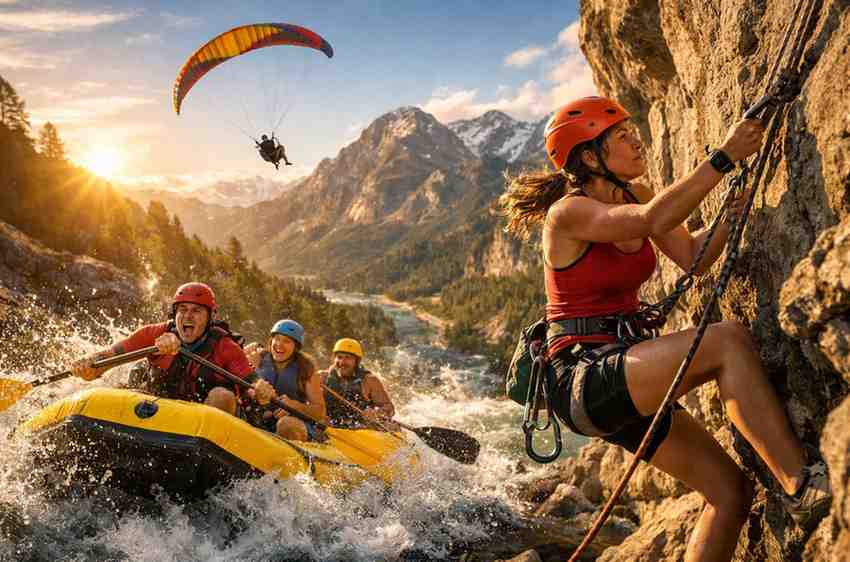
Adventure tourism is a type of travel that involves physical activity, interaction with nature, and an element of risk. It is defined by the pursuit of thrill, challenge, and unique experiences rather than just sightseeing. Activities often involve mountains, rivers, deserts, oceans, or extreme sports, requiring participants to be active, engaged, and sometimes physically fit.
Adventure tourism is about experiencing the world fully, not just observing it from a distance.
Key Aspects of Adventure Tourism
- Active Participation: Hiking, climbing, kayaking, skiing, or wildlife safaris.
- Nature-Based Experiences: Exploring natural landscapes like forests, mountains, deserts, and oceans.
- Cultural Immersion: Interacting with local communities, traditions, and lifestyles.
- Personal Challenge: Activities often push travelers physically, mentally, or emotionally.
Types of Adventure Tourism
1. Land-Based Adventures
- Hiking & Trekking: Famous trails like the Inca Trail in Peru, Kilimanjaro in Tanzania, and the Appalachian Trail in the USA.
- Rock Climbing & Mountaineering: Scaling cliffs and mountains, including Everest Base Camp or the Dolomites.
- Mountain Biking: Exploring rugged terrains and off-road trails.
2. Water-Based Adventures
- White-Water Rafting: Navigating challenging river rapids in destinations like Costa Rica or Nepal.
- Scuba Diving & Snorkeling: Discovering coral reefs, underwater caves, and marine wildlife in locations like the Great Barrier Reef.
- Kayaking & Canoeing: Exploring rivers, lakes, and coastal areas at your own pace.
3. Air & Extreme Sports
- Paragliding & Skydiving: Experiencing breathtaking aerial views and adrenaline rushes.
- Bungee Jumping: Leaping from bridges or platforms in iconic locations.
- Zip-lining & Canyon Swinging: Combining speed, height, and adventure in forested or mountainous terrains.
4. Wildlife & Nature Expeditions
- Safari Tours: Observing wildlife in natural habitats in Africa or South America.
- Polar Expeditions: Exploring Arctic and Antarctic landscapes while observing penguins, seals, and polar bears.
- Desert Adventures: Camel treks, dune bashing, and stargazing in deserts like the Sahara or Arabian Desert.
Why Adventure Tourism Is Growing
- Desire for Unique Experiences: Travelers crave experiences that are memorable and transformative.
- Health and Fitness: Active tourism promotes physical activity, mental wellness, and personal challenge.
- Connection with Nature: People seek immersive experiences in natural, often remote, environments.
- Cultural Engagement: Interaction with local communities offers deeper understanding of different cultures.
Benefits of Adventure Tourism
1. Physical Benefits
Engaging in outdoor and extreme activities improves strength, stamina, and overall fitness. Activities like hiking, cycling, or kayaking challenge the body in ways that traditional exercise cannot.
2. Mental and Emotional Benefits
Adventure tourism encourages stress relief, confidence-building, and resilience. Facing and overcoming challenges boosts self-esteem and mental well-being.
3. Educational Value
Travelers gain knowledge about geography, wildlife, ecosystems, and local cultures. Many adventure tours incorporate educational experiences, blending fun with learning.
4. Environmental Awareness
Spending time in nature fosters a sense of environmental stewardship. Adventure tourists often become advocates for conservation and sustainable travel practices.
Popular Adventure Tourism Destinations
- New Zealand: Extreme sports like bungee jumping, skydiving, and white-water rafting.
- Costa Rica: Zip-lining, volcano treks, and rainforest adventures.
- Norway & Iceland: Glacier hiking, fjord kayaking, and Northern Lights tours.
- Africa: Safari expeditions in Kenya, Tanzania, and Botswana.
- Antarctica & Arctic Regions: Polar cruises, ice trekking, and wildlife viewing.
- Sahara Desert: Camel trekking, dune bashing, and desert camping.
Tips for Safe and Enjoyable Adventure Travel
- Research Your Destination: Understand the climate, terrain, and necessary permits.
- Prepare Physically: Some activities require a good level of fitness and stamina.
- Use Trusted Guides: Experienced guides ensure safety and enhance your experience.
- Pack Appropriate Gear: Clothing, footwear, and equipment should match the activity and environment.
- Respect Nature and Local Cultures: Practice eco-friendly tourism and follow local customs.
Adventure tourism is more than just travel—it’s a lifestyle of exploration, challenge, and discovery. From scaling mountains to diving into coral reefs, trekking polar regions, or navigating vast deserts, adventure tourism satisfies the human thirst for excitement, learning, and connection with the natural world.
It’s about pushing boundaries, embracing the unknown, and creating unforgettable memories. For anyone seeking travel experiences that combine thrill, culture, and nature, adventure tourism is the ultimate way to explore the world.