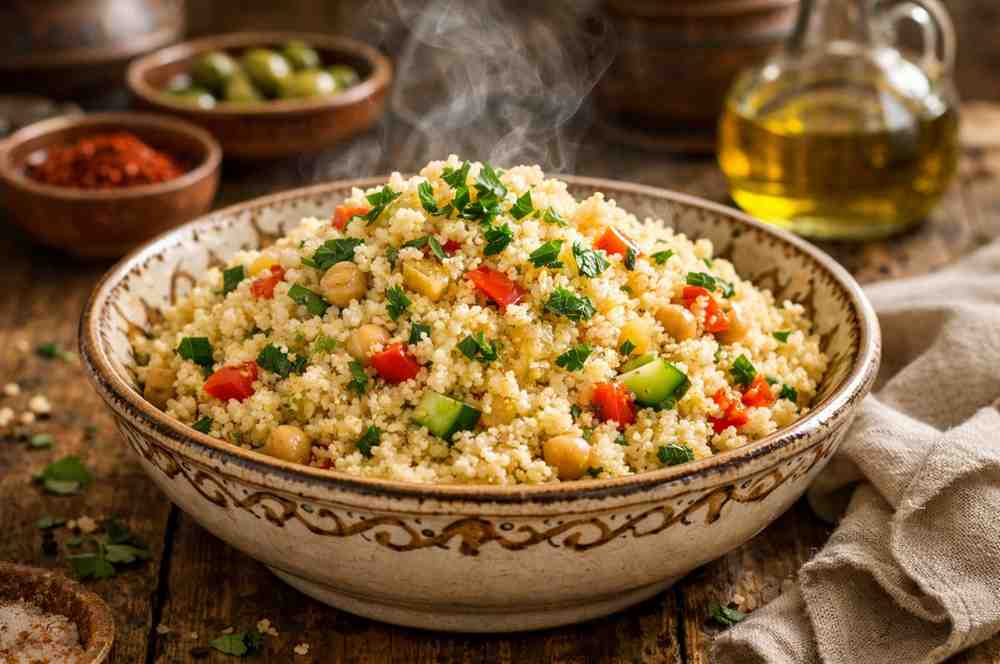
Couscous is more than just a side dish; it’s a culinary tradition steeped in history, culture, and versatility. Often overlooked outside North Africa, this tiny grain has a big story to tell, from its origins in the Maghreb to its place in modern kitchens around the world. Whether served as a simple accompaniment or as the centerpiece of a gourmet meal, couscous offers a delightful combination of texture, taste, and nutrition.
The Origins of Couscous
Couscous originates from the Maghreb region of North Africa, which includes countries like Morocco, Algeria, Tunisia, and Libya. Historical records suggest that couscous has been made for over a thousand years, and it has long been a staple for Berber communities. Traditionally, couscous was hand-rolled from semolina wheat, steamed over a simmering stew, and served with a variety of vegetables, meats, and aromatic spices.
The name “couscous” is believed to derive from the Berber word seksu, which means “well rolled” or “formed,” a nod to the tiny grains that make up this unique dish. Its historical significance is evident in traditional North African celebrations and communal meals, where couscous is more than sustenance—it’s a symbol of sharing, hospitality, and cultural identity.
What Is Couscous?
At its core, couscous is made from semolina wheat (durum wheat) that is moistened and rolled into tiny granules. These granules are then steamed, producing light, fluffy grains that act as a perfect canvas for a wide range of flavors.
There are several varieties of couscous available today:
- Moroccan Couscous: The smallest and most commonly found type, quick to cook, and often used in salads and side dishes.
- Israeli (Pearl) Couscous: Larger, pearl-like grains with a chewy texture, perfect for hearty salads and pilafs.
- Lebanese Couscous (Moghrabieh): The largest grains, often used in slow-cooked dishes or with stews.
Unlike rice or pasta, couscous has a subtle, nutty flavor and a delicate texture that allows it to absorb the flavors of broths, spices, and sauces beautifully.
Nutritional Benefits
Couscous isn’t just versatile; it’s also nutritious. A standard serving of whole wheat couscous provides a good source of:
- Carbohydrates: A great energy source, ideal for fueling both the body and mind.
- Protein: While not a complete protein on its own, couscous can be paired with legumes or meat for a balanced meal.
- Fiber: Whole wheat couscous offers dietary fiber, promoting digestive health.
- Minerals: It contains selenium, an antioxidant that helps support the immune system and thyroid function.
Compared to other grains, couscous is relatively low in fat and easy to digest, making it suitable for a wide range of diets.
How to Cook Couscous
Cooking couscous is both an art and a science, depending on the texture you prefer. Here’s a basic method:
- Boil Water or Broth: Use about 1 cup of liquid for every 1 cup of couscous.
- Add Couscous: Remove from heat and stir in the couscous.
- Cover and Let Steam: Let it sit for 5–10 minutes.
- Fluff with a Fork: Separate the grains gently for a light, fluffy texture.
For more flavor, consider steaming couscous over a fragrant vegetable or meat stew, just like traditional Maghreb recipes.
Couscous Around the World
While couscous is a North African staple, its influence has spread globally. In France, couscous is a popular comfort food, often served with spicy merguez sausage. In Israel and Lebanon, couscous forms the base of salads and festive dishes. In modern Western cuisine, couscous has become a go-to ingredient for quick, healthy meals, often appearing in grain bowls, stir-fries, and vegetarian dishes.
Some popular couscous dishes include:
- Couscous Royale: A Moroccan feast featuring a medley of meats, vegetables, and aromatic spices.
- Tabbouleh with Couscous: A twist on the classic Lebanese salad, substituting bulgur with couscous for a lighter texture.
- Vegetable Couscous: Perfect for a hearty, vegan-friendly meal, often paired with roasted vegetables and chickpeas.
- Sweet Couscous: North African desserts sometimes feature couscous sweetened with sugar, nuts, and dried fruits.
Tips for Perfect Couscous
- Use Broth Instead of Water: Adds depth and richness to the flavor.
- Fluff, Don’t Stir Too Vigorously: Over-stirring can make couscous clump together.
- Add a Drizzle of Olive Oil or Butter: Enhances the texture and prevents sticking.
- Mix in Fresh Herbs: Parsley, cilantro, or mint can elevate the taste instantly.
- Experiment with Spices: Cumin, paprika, cinnamon, or saffron can transform your couscous into a gourmet experience.
Couscous is a culinary gem that has stood the test of time. Its simplicity, adaptability, and rich cultural heritage make it a unique ingredient worthy of a permanent spot in your kitchen. Whether you enjoy it as a quick weeknight side dish, a festive main course, or an exotic salad, couscous offers endless possibilities to explore flavors, textures, and traditions.
From its humble Berber roots to modern fusion cuisine, couscous continues to prove that sometimes, the smallest grains carry the biggest stories.