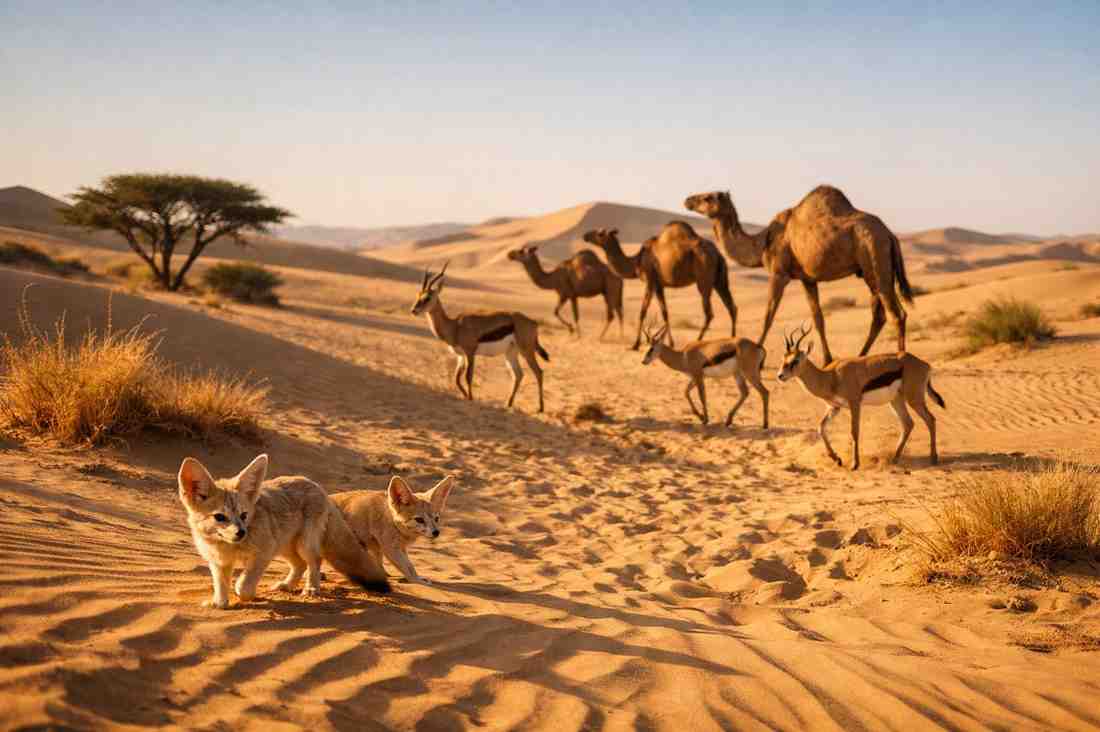
When most people think of the Sahara Desert, images of endless sand dunes, blazing sun, and harsh landscapes often come to mind. Yet, beneath this seemingly barren exterior lies a world teeming with life—resilient, resourceful, and uniquely adapted to one of the harshest environments on Earth. From nimble mammals to stealthy reptiles, the Sahara is home to an astonishing array of wildlife that thrives against all odds.
Exploring Sahara wildlife offers a glimpse into the incredible adaptability of life and the remarkable ecosystems that exist even in extreme conditions.
The Harsh Reality of the Sahara
Covering approximately 9.2 million square kilometers across North Africa, the Sahara is the largest hot desert in the world. Temperatures can soar above 50°C (122°F) during the day and drop drastically at night. Rainfall is sparse and unpredictable, averaging less than 25 mm (1 inch) per year in some areas.
Despite these challenges, life has evolved ingenious strategies to survive:
- Nocturnal Behavior: Many animals avoid the daytime heat by being active at night.
- Water Conservation: Species have adapted to extract moisture from food or store water in their bodies.
- Camouflage: Sandy-colored coats, scales, and shells help animals blend into their surroundings.
Iconic Mammals of the Sahara
- Fennec Fox: Famous for its oversized ears, this small fox uses them to dissipate heat and locate prey underground.
- Dromedary Camel: Known as the “ship of the desert,” camels are essential for transportation and can survive long periods without water.
- Addax Antelope: Critically endangered, the addax is perfectly adapted to desert life with broad hooves and a diet of dry vegetation.
- Dorcas Gazelle: Small and agile, these gazelles can survive without drinking water for months, relying on moisture from plants.
- Sand Cat: A rare, elusive feline that hunts rodents and insects at night.
Reptiles and Amphibians
- Horned Viper: A venomous snake that buries itself in sand to ambush prey.
- Desert Monitor Lizard: One of the largest lizards in Africa, feeding on small mammals, eggs, and insects.
- Saharan Toad: Some amphibians have evolved to survive long dry periods, emerging only after rare rains.
Birds of the Sahara
- Desert Sparrow: Small birds that feed on seeds and insects.
- Lanner Falcon: A raptor adapted to hunting in open desert landscapes.
- Greater Flamingo: Found in desert oases and salt flats, especially during migratory seasons.
Insects and Arthropods
- Desert Beetles: Some species collect water from fog or morning dew using specialized shells.
- Scorpions: Nocturnal predators that hunt insects and small vertebrates.
- Ants and Termites: Play a vital role in aerating the soil and decomposing organic matter.
Oases: The Heart of Sahara Biodiversity
Oases are lifelines for Sahara wildlife. These rare water sources support vegetation, attract migratory birds, and provide sustenance for mammals. Palm groves, freshwater pools, and reed beds create microhabitats where life flourishes. Many desert species rely on these oases for survival, making them critical ecological hubs in an otherwise unforgiving landscape.
Conservation Challenges
- Climate Change: Rising temperatures and prolonged droughts threaten delicate desert ecosystems.
- Habitat Loss: Expanding human settlements, agriculture, and mining disrupt natural habitats.
- Hunting and Poaching: Some species, like the addax, are critically endangered due to overhunting.
Conservation initiatives focus on protected areas, sustainable tourism, and wildlife monitoring to preserve the Sahara’s unique biodiversity.
Experiencing Sahara Wildlife
- Guided Desert Safaris: Travel with experts to spot wildlife, learn about desert ecology, and navigate dunes safely.
- Camel Treks: Explore remote regions and witness how camels interact with the ecosystem.
- Bird Watching Tours: Seasonal migrations make the Sahara a hotspot for unique bird species.
- Photography Expeditions: Capture stunning landscapes, dunes, and elusive desert fauna.
The Sahara Desert may appear empty and unforgiving, but it is teeming with life that has adapted in incredible ways. From elusive fennec foxes to resilient addax antelopes, horned vipers, and desert birds, the Sahara is a testament to the resilience of nature.
Exploring Sahara wildlife offers more than a safari—it’s a lesson in survival, adaptation, and the interconnectedness of life in one of the world’s most extreme environments. For travelers and nature enthusiasts, the Sahara is not just a desert; it’s a vibrant, living ecosystem full of wonder and discovery.